Crisis Management, Crisis Communication
Crisis Mgmt Design/Construction Industry
| ![[Item Image]](it150017.jpg) |
Crisis Management: Planning & Media
Relations for the Design and Construction
Industry, by Janine L. Reid. 2000, 192
pages.
|
|
|
|
DR612
|
|
$99.00
|
CRISIS MANAGEMENT :
PLANNING AND MEDIA RELATIONS FOR THE DESIGN AND CONSTRUCTION
INDUSTRY
by Janine L. Reid
“The only step-by-step guide to crisis management for the design and construction
industry.
“Accidents, lawsuits, labor walkouts . . . A crisis can come out of nowhere to
strike even the
most responsible and safety-conscious design and construction companies. The
good news
is that when bad things happen, there are ways to navigate successfully through
the tough
times to get your company back on track and back in business as soon as
possible. The
secret is to be prepared—and this book shows you how.
“Written by one of the best-known experts in the field.
“Crisis Management gives you the detailed practical knowledge, tools, and
techniques you
need to get ready for virtually any crisis situation—before it happens. With proven
procedures, forms, and checklists to guide you through every step of the process,
it helps
you to:
- Anticipate, identify, and prevent potential crises when possible
- Assemble and manage a quick-response crisis management team
- Develop a comprehensive crisis management plan
- Understand and use media communications effectively
- Establish and cultivate good media relationships
“No matter what area of design or construction you work in, Crisis Management
will make a
vital contribution to the overall health and survival of your business—because when
it comes
to the unexpected, preparation really is everything.”
- - - - - - - -
-
Written by one of the best-known experts in the construction industry, this is a
comprehensive, step-by-step guide to crisis management planning. In practical,
everyday
terms, the book outlines how to prepare for a crisis before one materializes through
a plan
that includes:
- Training employees and preparing a crisis management team--with clear
guidance on
what everyone must do in a crisis.
- Checklists and forms for establishing management plans, individual
responsibilities
on the management team, and personnel behavior expectations.
- How to work with the media in crisis situations.
- What to do to avoid litigation--and what to do when it's inevitable.”
- - - - - - - -
-
COMMENTS BY THE AUTHOR, JANINE L. REID
“You will sleep better knowing that a protocol is in place.
“Thank you for taking the time to read the comments on this book. You must be
exploring
the crisis management section because, a) you have had a crisis or, b) you are
getting ready
for one...just in case. If your selection was "a", you are not alone because I was in
that
position 15 years ago. I quickly learned how miserable it is to be
unprepared...especially if
there is a loss of life and/or the news media show up. If you selected "b", I applaud
you for
being proactive.
“Over the last 15 years, I have worked on dozens upon dozens of crises and I am
continually
learning about new techniques and approaches to help a company during and after
a crisis -
to not only regain its position in the marketplace but to create a support system
amoungst
its employees and various audiences. Total crisis management is what this book
is all about.
It is written in a Q&A format to allow for quick reference and includes field tested
checklists
and forms. There are four chapters dedicated to working with the news media
during a
crisis...from how reporters do their job to what to do if they screw that job up. It
also
discusses some options on what to do if you screw up.
“As you can see by the title, this book was written for the construction industry;
however, the
discipline of crisis management is the same no matter which industry you wish to
apply the
material.
“My hope for you is that you will never have to activate your crisis management
plan...but,
you will sleep better just knowing it is there. Just in case.”
- - - - - - - -
-
EXCERPT FROM THE FOREWORD
“Planning and management are the bricks and mortar of construction. One without
the other
is a recipe for problems. The best of managers, working without a plan, are headed
for
failure,
just as certainly as a plan lacking management. In real-world construction, though,
the finest
plan backed by top-notch managers won't guarantee success. Improve the odds?
Definitely.
But when you throw together dozens of trades, subs, architects, and engineers,
probably for
the first time, on a typical one-up project, a crisis of some sort is as certain as
sunrise.
“How to deal with that eventual crisis is what Janine Reid's book is all about from
crisis
identification through crisis management to crisis recovery. When bad things
happen to
good
companies, the ability to deal with the crisis is what separates truly professional
firms from
the wannabes.”
- Howard B. Stussman Editor-In-Chief, ENR
- - - - - - - -
-
EXCERPT FROM THE PREFACE
“Is crisis management an oxymoron? For the unprepared, the answer is a
resounding YES! I
speak from experience, because I was one of the unprepared.
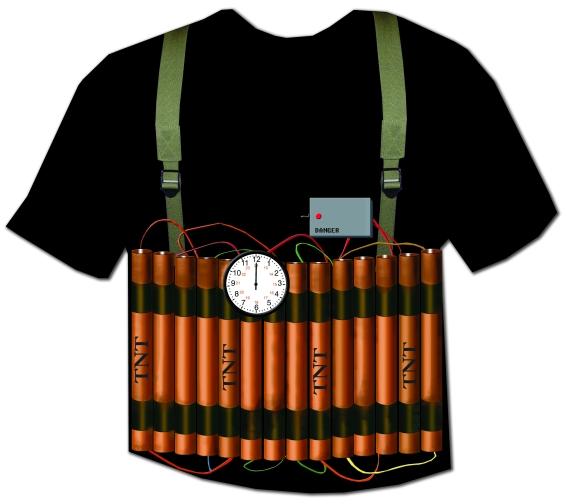
“It was August 18, 1985, and I was in the midst of preparing a presentation for a
general
contractor I was working for in Denver, Colorado, when the phone rang. Annoyed at
the
disruption, I picked up the receiver and answered with a sharp "Hello."
“I have just received the most frightening call of my life. Some lunatic said that he
has
planted a bomb on the site and it is going to explode in two hours. What should I
do?"
shrieked Mike, a superintendent on a project my company was working on in
Albuquerque,
New Mexico.
This project, which broke ground in March, was a 15-story commercial office
building located
in downtown Albuquerque. The job site encompassed an entire city block, and we
were
approximately 45% complete at the time of Mike's call.
“As head of marketing, it was suddenly my responsibility. Because I did not know
what to
do, I did what any unprepared person would do: I panicked. "Evacuate the job site
and I'll be
on the next plane to Albuquerque," was my sophomoric response.
“On the plane to Albuquerque, I brooded that I was truly in over my head and had
no clue how
to manage the situation. No one else in my company knew either, so I had
nowhere to turn
for counsel. The words of Lily Tomlin came to mind: "We are all in this alone." I
had never
before, or since, felt so alone. This bomb threat was happening on my watch, and I
was not
ready.
Upon my arrival in Albuquerque, my heart rate seemed to enter the danger zone.
As my cab
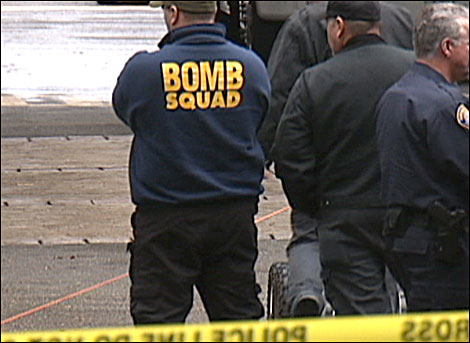
pulled up to the job site, I saw police cars and fire trucks everywhere. The workers
had been
evacuated and a police officer with a bomb-sniffing dog was combing the property.
Once
inside the job-site trailer, I immediately was immersed in a series of strategy
sessions.
“The bomb threats continued for three days and placed an immense amount of
stress on our
ad hoc crisis management team. Every time the phone rang in the trailer, the team
experienced everything from paralysis to anger.
“The authorities advised us that there was a high incidence of bomb threats in the
downtown
area and that they felt these calls fell in the "threat" category. However, there were
no
positive assurances. We hired 24-hour security and issued badges to everyone
who worked
on the project. No one was allowed near the site unless cleared by security. I
stayed in the
trailer playing the never-ending game of What if? The purpose of this game, which
is
described in Chapter 1, is to anticipate any and all spinoff crises of the initial crisis
and to
determine the appropriate strategy to counter any negative effects-for example,
What if it is a
real bomb? What if there is an explosion and people are hurt or killed? What if the
media
arrive and start asking questions? The what-if game can be endless, each potential
crisis
more horrifying than the last.
“On the fourth day, the calls stopped. Hesitantly, everyone returned to work.
Continuing our
strict security measures throughout the rest of the project, we completed it on time
and
[barely] within budget.
“Crises are excellent teachers. As I reflect on my first crisis, I treasure the
accelerated
education I received in Albuquerque. Two of the many lessons I learned during this
incident
were that no one is immune to the inevitable and that crises do not discriminate.
They do not
care if you have the best safety program in the business. Because of the human
element
involved, the best safety program is no guarantee against a crisis. Furthermore,
crises do
not
care if you are a small and specialized company. In fact, a crisis can deal a
crippling blow to
a small and unprepared company with limited resources. The sky can fall on the
best of
companies; however, a proactive company understands that stuff can happen and
so will be
prepared for the inevitable.
“Albuquerque made me a believer in having an established protocol to guide
responses to
crises, so on my flight back to Denver I began writing my first crisis management
plan. It
served me well because I had the opportunity to test it in several subsequent
situations. The
plan afforded me the luxury to be proactive rather than reactive, and when the next
crisis
came, it allowed me to position my company in a much more favorable light with
its
audiences.
“In August 1985, my career changed direction. I began researching this discipline
called
crisis management planning and in 1987 wrote my first book, What to Do When
the Sky
Starts Falling. I have had the opportunity work on dozens upon dozens of crisis
situations
and am continually learning about new techniques and approaches to help a
company regain
its position in the marketplace after a crisis and to create a support system among
its
employees. Total crisis management is what this book is all about.
“However, there is no one-size-fits-all protocol for every crisis. Each has its own
personality
and challenges. With this warning in mind, read this book. Its intent is to share
research,
experiences, and lessons learned from working on a host of crises over the past
two
decades. To facilitate this process, the book takes you through the four phases of
a crisis:
crisis identification and prevention, crisis management, crisis communications,
and crisis
recovery. The material is presented in a question and answer format to allow for
quick
reference.
“So is crisis management an oxymoron? For the prepared, the answer is no. My
experience
has shown that your chances of managing a crisis increase exponentially with the
amount of
preparation and planning you do beforehand. This book provides the information
you need to
anticipate crises. My hope is that you never need to activate your crisis
management plan,
but you will sleep better just knowing that it is there just in case.
- - - - - - - -
-
TABLE OF CONTENTS
FOREWORD
PREFACE
ACKNOWLEDGMENTS
1 CRISIS IDENTIFICATION AND PREVENTION
What is a crisis?
What types of crises could knock on your door?
How do you compare with the rest of the industry?
Does a crisis affect a company's reputation?
Can you prevent crises?
How can a crisis go from bad to worse?
What is a "what-if "analysis?
What is the impact of your crisis on your company and various audiences?
Chapter Summary
2 THE CRISIS MANAGEMENT TEAM
Why is a team needed?
What are the selection criteria for the team members?
Who are the members of the core crisis management team?
What are the responsibilities of the core crisis management team?
Who are the members of the crisis management team for a project?
What are the responsibilities of the crisis management team for a project?
How do you track the team members' activities?
Chapter Summary
3 COMPONENTS OF A CRISIS MANAGEMENT PLAN
Why is a plan so important?
What should be included in your corporate plan?
What should be included in a project plan?
What should be included in a project plan for short-duration projects?
How should your plan be organized?
Who should get a copy?
What type of event calls for the plan's activation?
How often should your plan be updated?
Chapter Summary
4 HOW REPORTERS DO THEIR JOBS
Where do they get those headlines?
Why is your worst day a reporter's best day?
What are reporters looking for when they cover your crisis?
What can a company in crisis do to help a reporter cover the story yet protect its
best
interests? Chapter Summary
5 Working with Reporters in a Crisis Situation
What does it mean to buy time with the media?
How do you develop statements as the crisis progresses?
What questions can you expect, and how should they be answered?
How can you provide the media with updates on your crisis?
How do you handle media calls via the telephone?
Is there a time when it is not in a company's best interest to talk to the media?
What if you determine that you made a mistake after the interview is over?
What are your communication obligations if you are a public company?
What are guidelines for the spokesperson to follow?
Chapter Summary
6 MORE ON THE GOOD, THE BAD, AND THE TRULY UGLY
What types of media will cover your crisis?
What if the media tries to get information from your employees?
How do you handle a hostile or pushy reporter?
What if the media misrepresents the facts, takes your statements out of context,
or
misquotes you?
What if you are guilty?
How do reporters perceive themselves?
Chapter Summary
7 NEWS CONFERENCES
When is a news conference advantageous?
Where should you hold a news conference?
Should you prepare handout material for the reporters?
Who should participate in the news conference?
How do you notify the media of the news conference?
Chapter Summary
8 COMMUNICATING WITH YOUR VARIOUS AUDIENCES WHEN THE
NEWS
IS
BAD
Who are your audiences and why do you need to communicate with them?
What is your message and what is the method of delivery?
How often should you update your audiences on the status of your crisis?
Is print advertising a good medium to use to communicate your message during
and after a
crisis?
Should you contact your audiences if your crisis has not gone public?
Chapter Summary
9 Developing Positive Relations with the News Media through a Public
Relations
Program
What does public relations mean?
Why don't more companies utilize public relations programs?
How do you take credit for the good things you do?
How can your public relations effort have a positive effect on the industry's image?
Chapter Summary
10 TRAINING YOUR EMPLOYEES TO BE PREPARED FOR A CRISIS
Why does a company need to train its employees in managing a crisis?
Who should participate in a crisis management training session?
What training method should be used?
What material should be covered?
How long should a training session last?
What are some ideas for providing in-house media training?
Chapter Summary
11 CRISIS RECOVERY
How do you analyze your company's response to a crisis?
How do you rebuild your image?
Will it ever be over?
Chapter Summary
12 WHEN BAD THINGS HAPPEN TO GOOD COMPANIES: TWO CASE
STUDIES
Walsh Construction Company
Asphalt Products, Inc.
13 CONCLUSION
Lessons Learned in Crisis Management
Closing Thoughts
Appendix
Survey Results References
Index
- - - - - - - -
-
ABOUT THE AUTHOR
“Janine L. Reid, Principal of the Janine Reid Group, Inc., has over 20 years
of
construction industry experience in crisis management. A nationally recognized
speaker and
winner of the Associated General Contractors’ Award for Construction Excellence
she is the
author of What to Do When the Sky Starts Falling.
- - - - - - - -
-
2000, 192 pages. Order #DR612.
- - - - - - - -
-
Rothstein Associates Inc.
4 Arapaho Rd.
Brookfield, CT 06804-3104 USA
1-888-ROTHSTEin; (888.768.4783)
Telephone: 203.740.7444; 888.768.4783
Fax: 203.740.7401